Cannington Viaduct
Point of interest
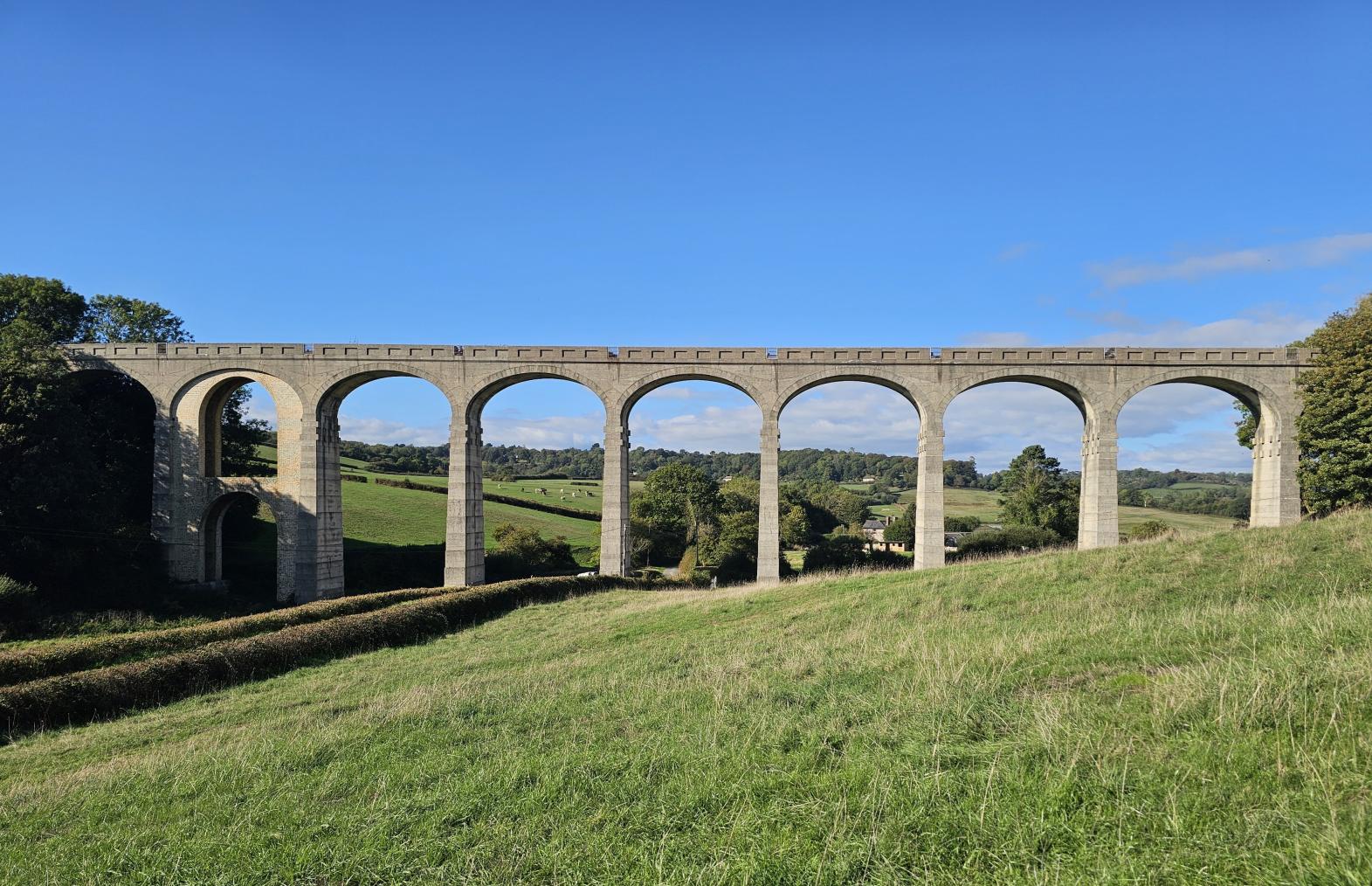
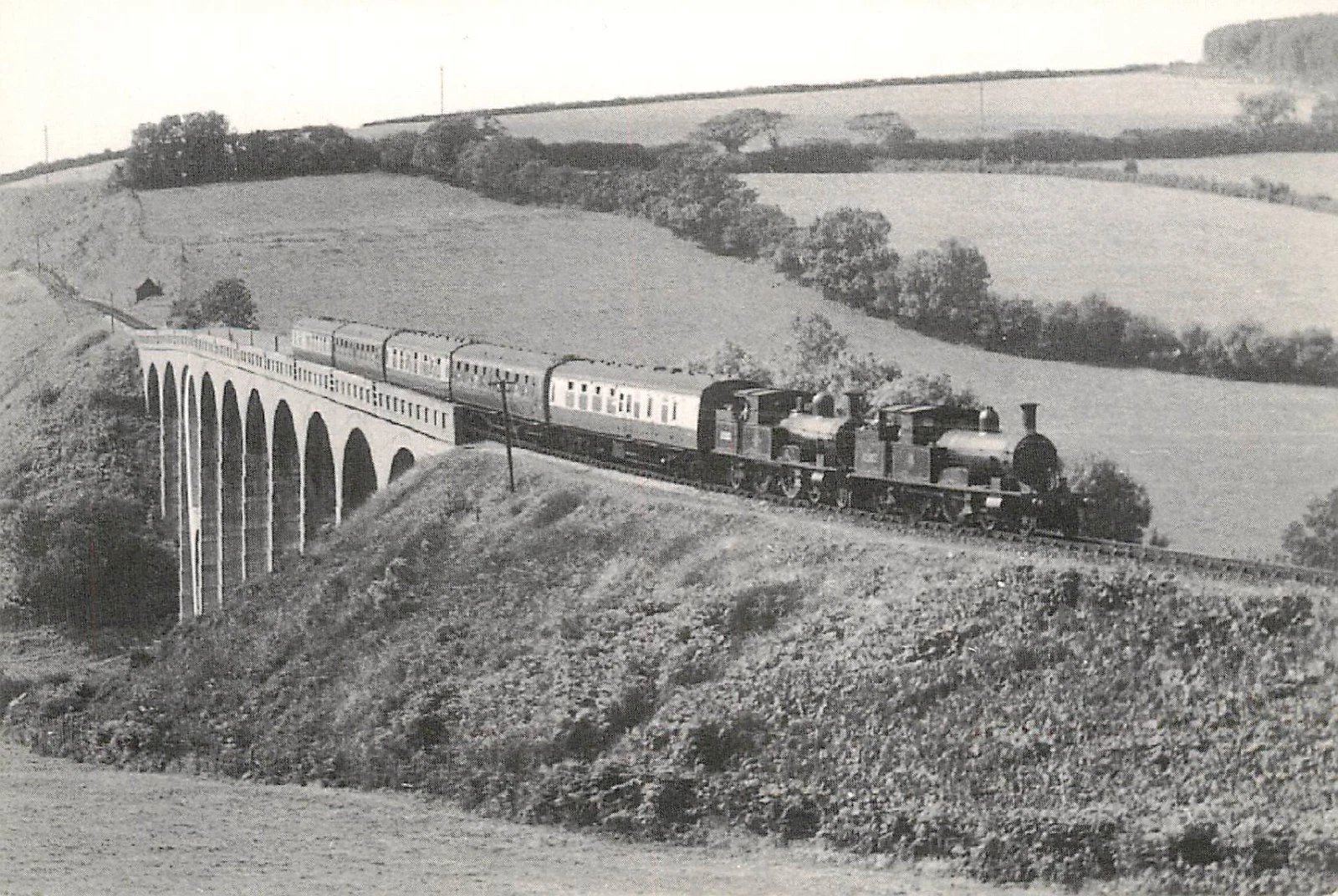
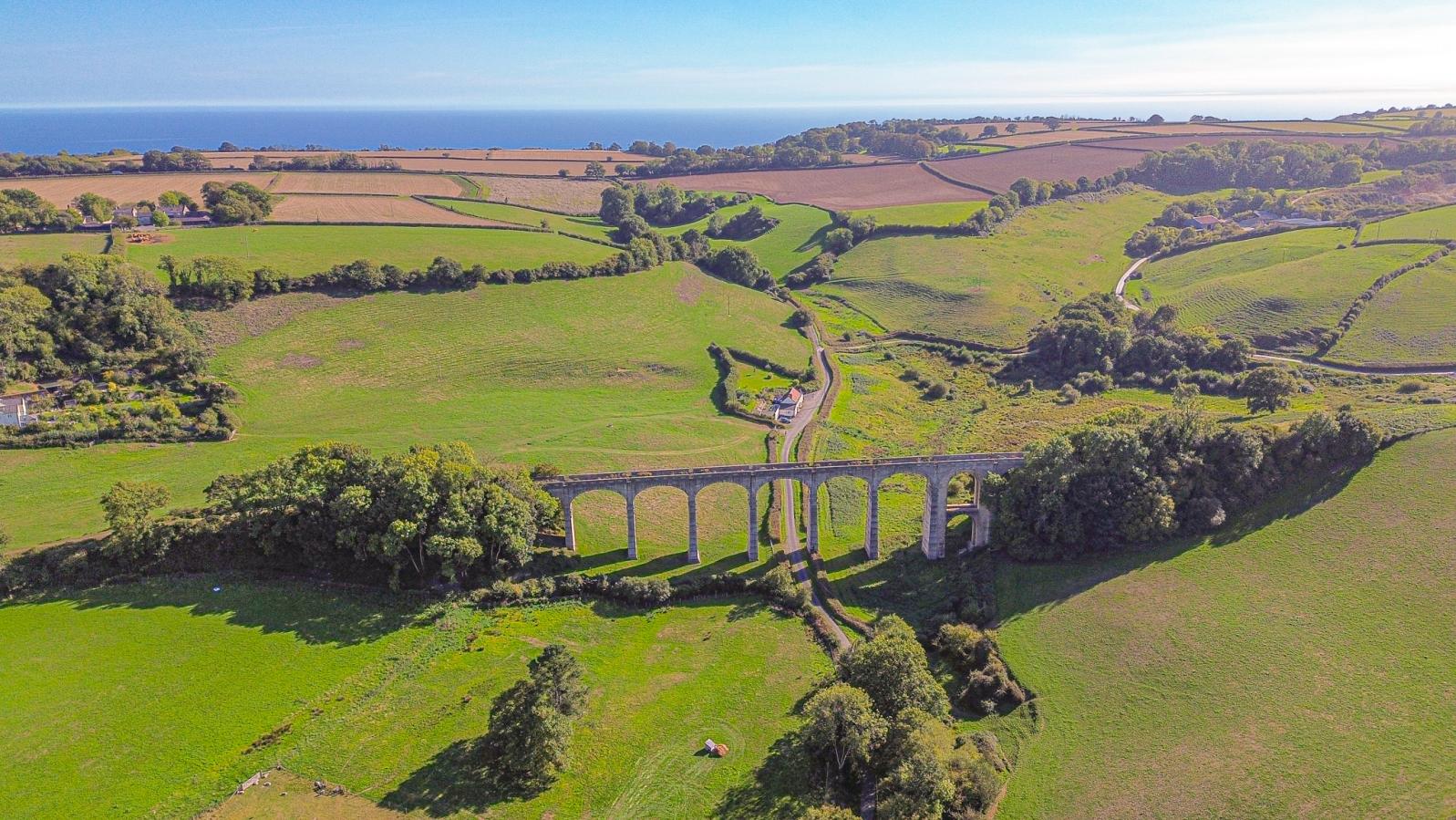
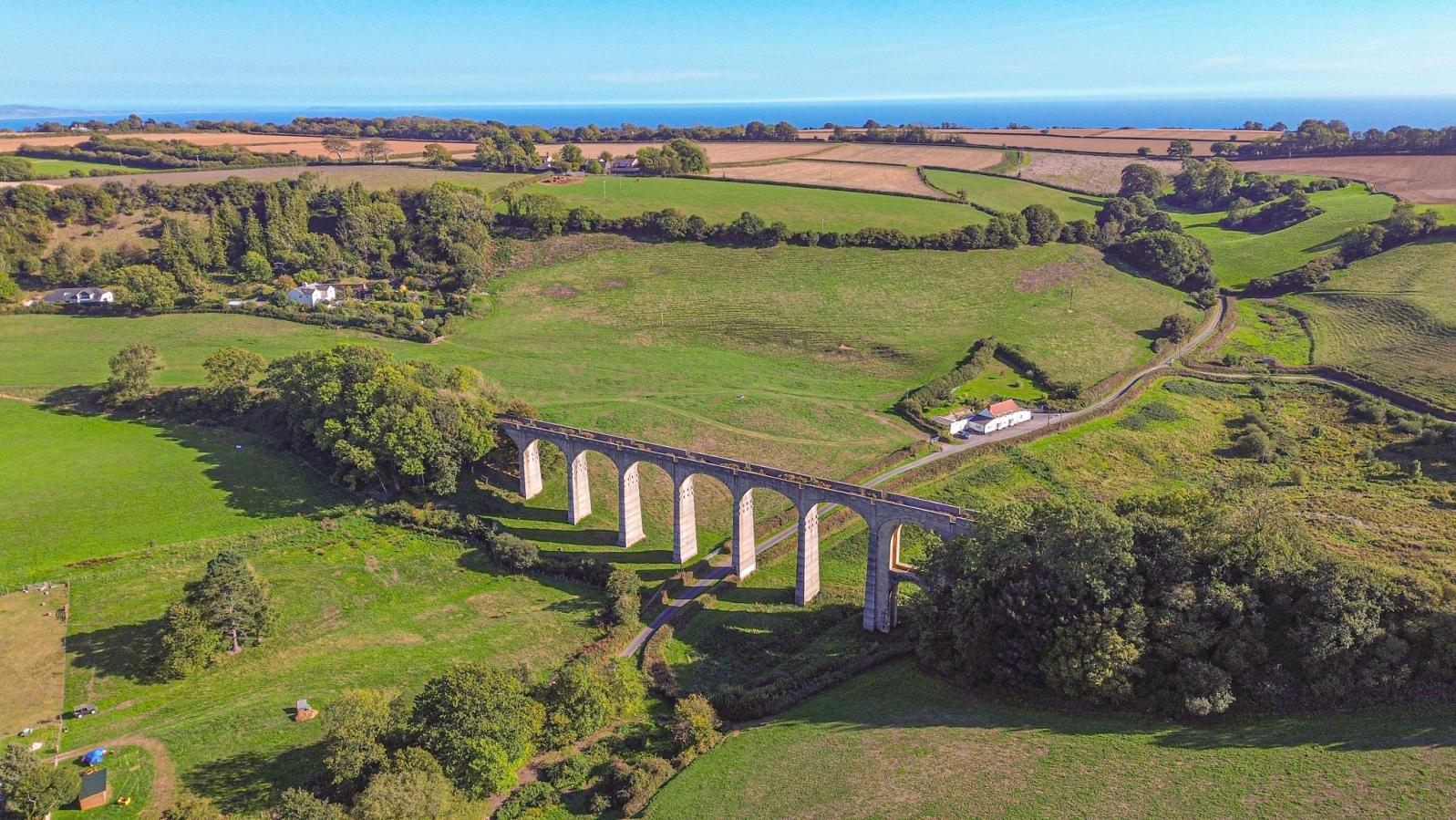
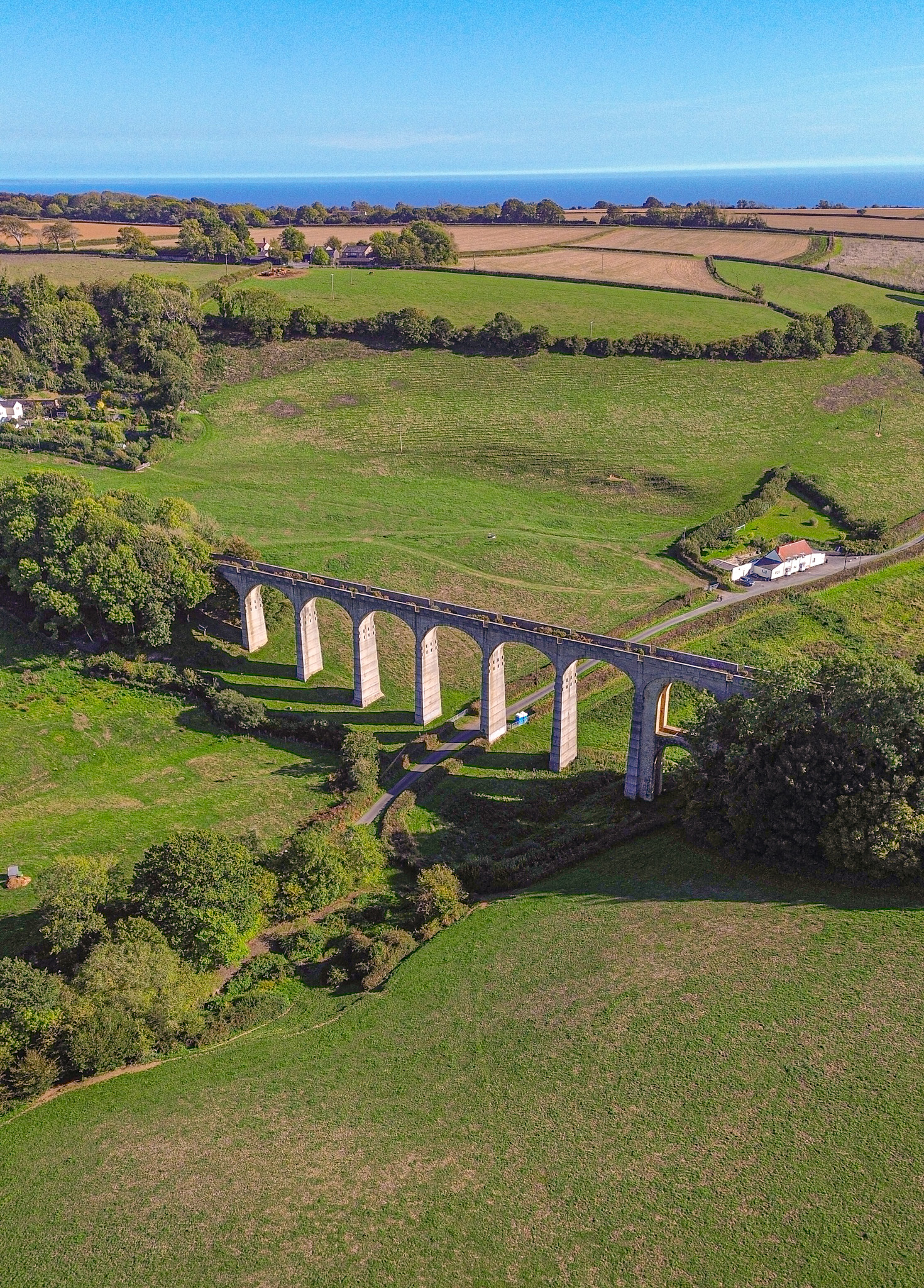
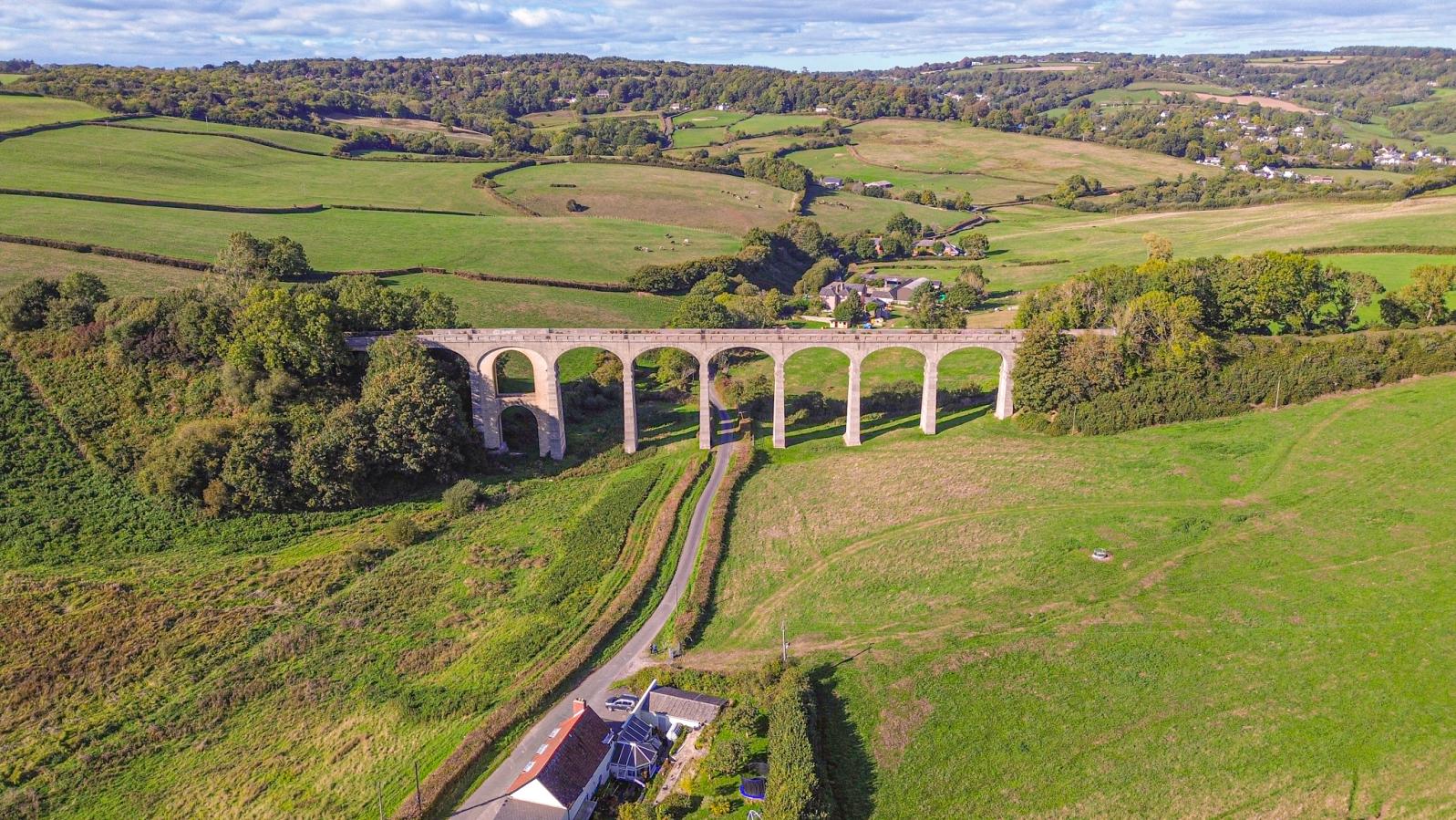
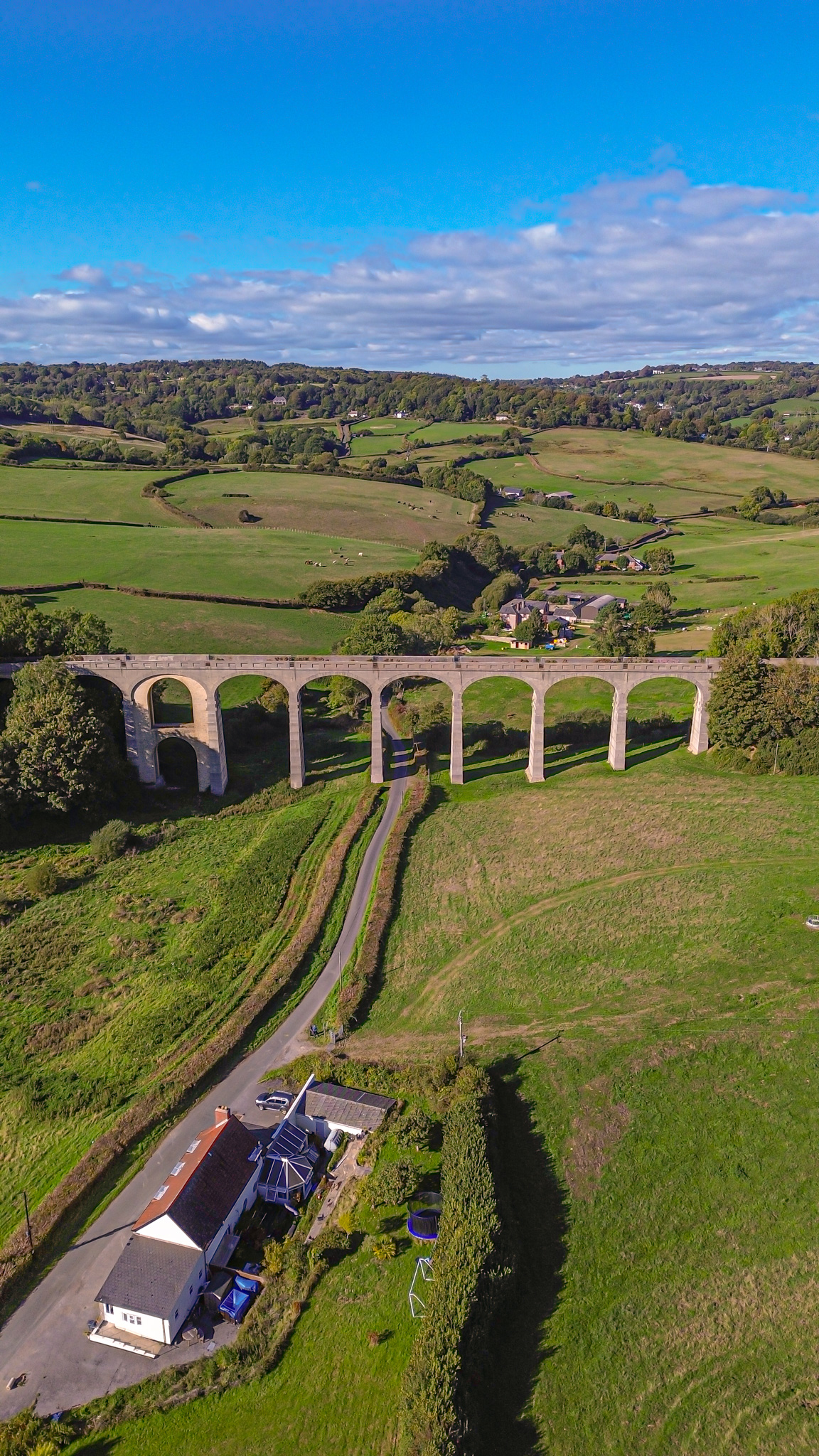
Standing high above the Axe Valley, the now disused Cannington Viaduct formed part of the Lyme Regis branch line, a railway line connecting the seaside town of Lyme Regis with the main line railway network at Axminster.
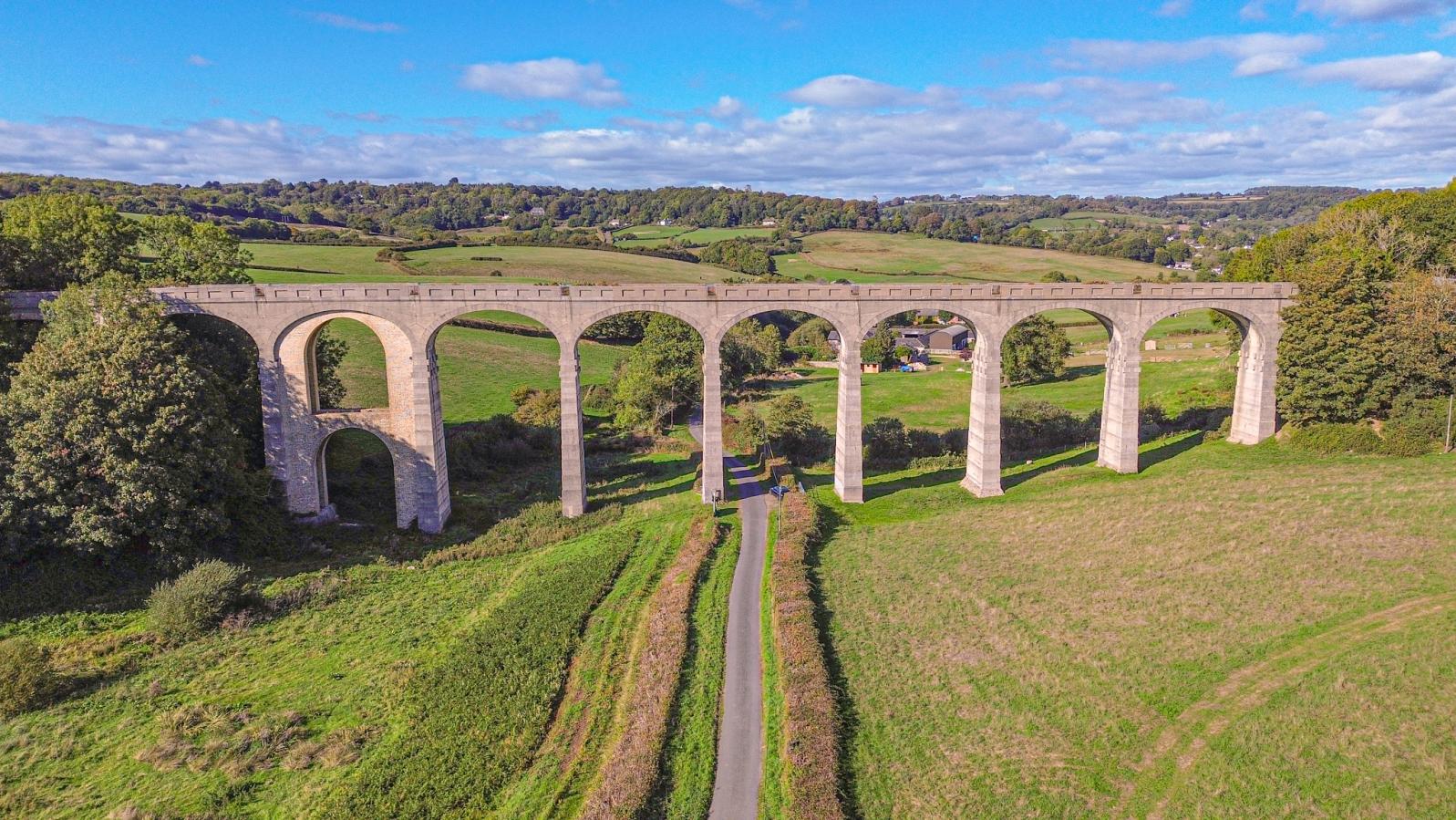
Authorised by the Axminster and Lyme Regis Light Railway Order in 1899, the viaduct is by far the largest structure to have been built on a light railway in Britain at around 92 feet high and 200 yards long, spanning a valley route 5½ miles through Uplyme and Combpyne from Axminster. The pioneering structure is Grade II listed and was one of only a handful of such structures to be constructed entirely of reinforced concrete rather than brick, with ten elliptical arches and tall slender piers.
Building work was subcontracted to Henry Osborne Baldry and John Eardley Yerburgh of Westminster, London and cement for the concrete was shipped in by sea to Lyme Regis Cobb. The viaduct was constructed without scaffolding and workers built it two feet at a time using shuttering boxes filled with concrete carried by an overhead cableway. During construction the west abutment and the adjacent pier slipped badly due to subsidence and the third arch from the west end had to be stabilised and reinforced by an infilling of two tiered arched brick structures tied together with iron rods.
The viaduct was used by trains for only 62 years, from 1903 to 29th November 1965 when the branch was closed completely as part of the Beeching Cuts. There is now no public access to the viaduct except during organised events.